
 Established UK Brand
 PayPal Credit
TL;DR – Sideboards UK at a Glance
Sideboards have quietly become one of the most useful and design-led pieces of furniture in modern UK homes. Once seen mainly in formal dining rooms, they are now used across living rooms, open-plan spaces, hallways and even home offices. The reason is simple: British homes need furniture that works harder without making rooms feel cluttered or heavy.
A well-chosen sideboard provides storage, surface space and visual balance. It helps organise everyday items while anchoring a room in a calm, considered way. Whether you live in a compact terrace, a modern flat or a larger family home, the right sideboard can transform how a space functions day to day.
Modern British interiors favour flexibility. Open-plan layouts, smaller room footprints and multifunctional living mean storage needs to be smart rather than bulky. Sideboards fit this brief perfectly.
They offer:
In living rooms, sideboards often replace traditional cabinets, sitting lower and wider to keep sightlines open. In dining spaces, they provide easy access to tableware without dominating the room. In hallways, a slim sideboard can store essentials while creating a welcoming first impression.
Furniture in Fashion has leaned into this shift by offering sideboards designed around real UK layouts rather than oversized continental proportions.
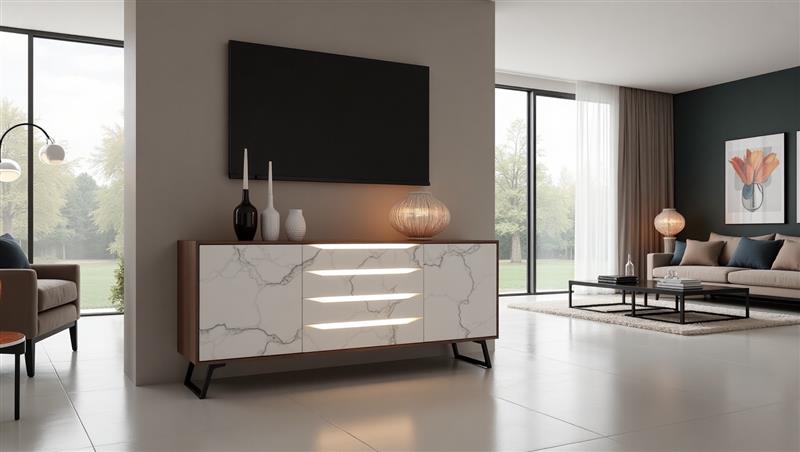
Sideboards are often confused with cabinets, dressers or console tables, but they serve a distinct role.
Sideboards are typically:
Compared with tall cabinets, sideboards keep rooms feeling open. Compared with console tables, they offer far more usable storage. This balance makes them ideal for homes where every piece of furniture must earn its place.
Proportion is more important than people realise. A sideboard that is too tall can feel heavy. One that is too narrow can look lost against a wall.
As a general guide for UK homes:
Low, wide sideboards work particularly well in modern living rooms, helping ground the space without blocking light. Slim sideboards suit hallways and smaller dining areas where circulation matters.
Internal layout matters just as much as exterior design. The best sideboards combine different storage types to support everyday living.
Look for:
For busy households, a mix of cupboards and drawers usually works better than one large open space. It keeps things organised and avoids the “everything shoved inside” problem.
Finish choice shapes how a sideboard feels in a room. UK homes tend to favour finishes that reflect light, age well and suit multiple styles.
Common choices include:
Popular colour directions lean towards soft greys, warm beiges and off-whites, with deeper accents such as charcoal or muted green used sparingly. A popular modern palette pairs warm neutral walls with sideboards in tones similar to:
These shades work across living and dining spaces without feeling trend-driven.
A sideboard should not feel like an afterthought. Used well, it can help tie a room together.
Consider:
Plants, table lamps and textured accessories help soften clean lines and prevent the furniture from feeling too rigid or formal.
In real British homes, sideboards are rarely used in just one way. Their value comes from how easily they adapt to different rooms, routines and lifestyles. Understanding how sideboards are used in practice helps avoid buying something that looks good but never quite works.
In living rooms, sideboards often replace bulky cabinets or shelving units. They provide storage for items that need to be close at hand while keeping the room visually calm. In open-plan homes, a sideboard can quietly separate zones without creating physical barriers.
In dining areas, sideboards act as everyday support furniture rather than occasional-use pieces. Plates, glassware, table linens and even small appliances are stored where they are needed most, reducing trips back and forth to the kitchen.
Hallways and transitional spaces are another common location. A slim sideboard offers a place for keys, bags and post while keeping clutter hidden. This is especially useful in UK homes where entrances are often compact and shared with other functions.
Good storage is not just about capacity. It is about how easily items can be put away and retrieved. Sideboards work well because they sit at a comfortable height and encourage everyday organisation without effort.
Practical habits supported by well-designed sideboards include:
This approach suits Gen X households who value order and efficiency, but it also appeals to Millennials and Gen Z homeowners who prefer calm, uncluttered interiors with fewer visible distractions.
Open-plan living has changed how furniture is selected. In these spaces, sideboards often serve more than one role at once.
A sideboard in an open-plan room may:
In these layouts, finishes matter more. A sideboard that blends rather than dominates helps maintain flow. Neutral tones such as soft beige #E6E0D6 or warm greige #CFC8BE are popular because they connect easily with different furniture styles across zones.
There is no single correct answer, but usage patterns reveal clear preferences.
Cupboards tend to work best for:
Drawers are preferred for:
Most UK households benefit from a combination of both. Sideboards that mix cupboards and drawers tend to remain useful for longer as needs change over time.
A common mistake is over-styling. While sideboards often act as display surfaces, they still need to function day to day.
A practical styling approach includes:
This balance appeals across demographics. Gen Z homeowners often prefer minimal, flexible styling. Millennials lean towards curated but practical surfaces. Gen X households prioritise ease and function above all.
Sideboards tend to stay in homes for many years, so colour choices should feel stable rather than reactive.
Current long-lasting colour directions in UK interiors include:
These shades work well across changing décor and do not rely on trend cycles to feel current.
Sideboards often outlast sofas and tables because their function remains relevant even as rooms change. A good sideboard can move from dining room to living room or hallway without feeling out of place.
This makes build quality important. Solid construction, smooth-running drawers and durable finishes contribute to longevity. Investing slightly more upfront often prevents the need for replacement later.
Furniture in Fashion focuses on sideboards that combine modern proportions with practical construction, making them suitable for everyday UK living rather than occasional display use.
For many homeowners, furniture decisions become more considered over time. The focus shifts away from visual impact alone and towards how a piece fits into daily routines, how easy it is to live with, and how well it holds up year after year.
Sideboards suit this stage of home ownership particularly well because they offer order without complication. Good design shows up in the details: doors that open smoothly, drawers that don’t stick, shelves that feel solid and finishes that cope with everyday use without constant maintenance.
Practical priorities often include:
Calmer colour choices tend to work best here. Warm greys, soft taupes and muted neutrals such as #B9B7B3 or #C2B8AC create a settled, timeless feel that doesn’t need frequent updating as styles change.
Another advantage of well-chosen sideboards is their longevity. A piece that works in a dining room today can move into a living room or hallway later without feeling out of place. This flexibility is often what turns a sideboard from a short-term purchase into a long-term fixture in the home.
Sideboards are often underestimated in terms of value. Because they are not tied to one specific use, they adapt as lifestyles change. This flexibility makes them one of the most cost-effective long-term furniture purchases.
They add value by:
When chosen carefully, a sideboard can remain useful even when other furniture is replaced.
Rather than short-lived design trends, UK homeowners are gravitating towards features that quietly improve daily living.
These include:
Subtle texture is replacing high contrast, with matte and softly grained surfaces becoming more popular than overly glossy or decorative designs.
Sideboards can help solve layout challenges that are common in UK homes. Placed thoughtfully, they improve circulation rather than restrict it.
Good placement strategies include:
This approach supports open-plan living while keeping spaces defined and comfortable.
What is the best sideboard height for UK homes?
Most sideboards work best when they sit below window height and below eye level when standing, helping rooms feel open and balanced.
Are sideboards suitable for small living rooms?
Yes. Slim, low-profile designs with lighter finishes can add storage without overwhelming smaller spaces.
Should I choose cupboards or drawers?
A combination of both tends to work best, offering flexibility for different storage needs.
Do sideboards only belong in dining rooms?
No. Sideboards are commonly used in living rooms, hallways and open-plan spaces across UK homes.
What finish is easiest to maintain?
Matte and wood-effect finishes tend to hide fingerprints and wear better than high-gloss surfaces.
How do I stop a sideboard from looking cluttered?
Limit surface styling to a few functional and decorative items and keep the rest of the surface clear.
Are sideboards a good long-term furniture investment?
Yes. Their adaptable use and durable construction make them suitable for long-term ownership.
Sideboards have evolved into essential furniture for modern British homes. They support organisation, improve room balance and adapt easily as lifestyles change. Whether used in a living room, dining area or hallway, the right sideboard brings calm and structure without dominating the space.
By focusing on proportion, storage layout and durable finishes, and by choosing designs that suit real UK living, homeowners can invest in sideboards that remain useful and relevant for years. Furniture in Fashion continues to offer sideboards designed around these practical needs, helping create homes that feel organised, comfortable and thoughtfully put together
Payment options:







 Trusted UK Furniture Retailer
 Free Delivery Most UK
 Secure Payments
 Established UK Brand
 Pay Pal Credit


Payment options: