
 Established UK Brand
 PayPal Credit
In modern UK homes, wardrobes are no longer treated as background furniture. They shape how a bedroom feels, how calm it looks, and how practical it is to live with every day. As bedrooms increasingly double as places to work, relax and reset, the right wardrobe choice can quietly improve daily routines or, if chosen poorly, create long-term frustration.
One of the most common decisions homeowners face is whether to choose a sliding door wardrobe or a hinged door wardrobe. While both serve the same basic purpose, they behave very differently once placed in a real bedroom. The difference is not just about style. It affects light, movement, storage flow and how spacious a room feels when fully furnished.
This matters particularly in the UK, where bedrooms are often compact and layouts vary widely between new builds, period homes and apartments. A wardrobe that works beautifully in one space can feel awkward in another. Understanding how sliding and hinged wardrobes interact with room proportions is the first step toward making a confident choice.
Bedrooms today are expected to do more with less space. As a result, wardrobes have evolved from simple storage units into furniture that actively shapes the room. Finishes, door mechanisms and proportions now influence how open or closed a bedroom feels.
Sliding wardrobes have grown in popularity partly because of this shift. Their clean lines and uninterrupted fronts suit contemporary interiors and help reduce visual noise. Dark finishes paired with glass or mirrored panels create contrast while still reflecting light, which can be especially effective in rooms with limited natural daylight.
A good example of this modern approach is the Cubi sliding wardrobe in anthracite with a black glass insert. Its surface feels architectural rather than bulky, allowing it to sit confidently in a bedroom without overwhelming it. Because the doors slide rather than swing, it can be positioned closer to beds or side tables without disrupting circulation. https://www.furnitureinfashion.net/cubi-sliding-wardrobe-in-anthracite-front-and-black-glass-insert-p-24697.html
In contrast, hinged wardrobes have adapted by becoming more refined in finish and proportion. Rather than heavy, traditional designs, many modern hinged wardrobes now use softer colour palettes, mirrored doors and streamlined handles to stay relevant in contemporary homes.
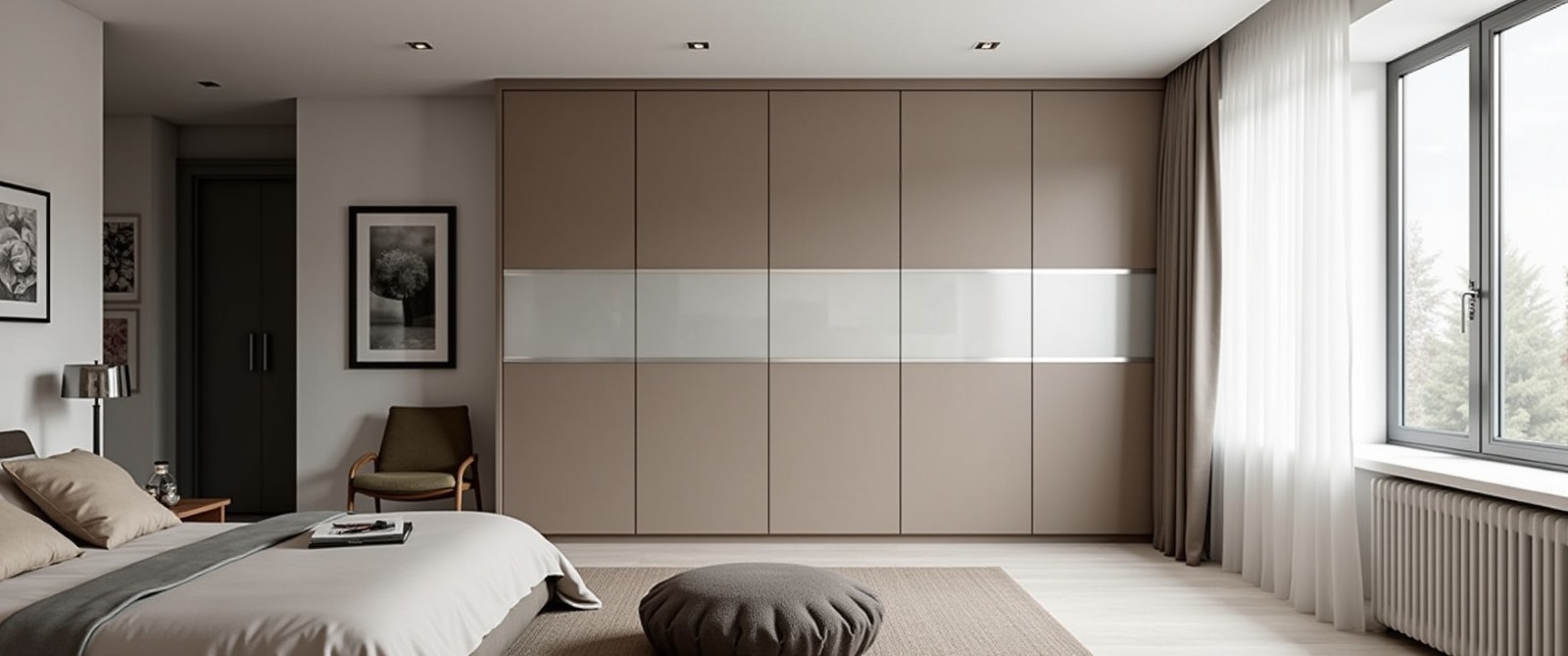
Sliding door wardrobes tend to create a calmer visual environment. Because the doors sit flush and move horizontally, they reduce the sense of interruption in a room. This is particularly noticeable in smaller bedrooms, where every door swing can feel intrusive.
Mirrored or glass sliding panels reflect light back into the room, often making the space feel wider and more open than it actually is. This can be a subtle but powerful effect in apartments or north-facing bedrooms where brightness is limited.
Another advantage is how sliding wardrobes integrate with modern layouts. Beds can be positioned closer to the wardrobe without affecting usability, and walkways remain clear. For many people, this flexibility makes sliding wardrobes feel more intuitive to live with day to day.
However, sliding wardrobes also guide how you interact with storage. Only part of the interior is visible at one time, which encourages more structured organisation. For some, this feels cleaner and more controlled. For others, it can feel restrictive. This is not a flaw, but it is a lifestyle consideration that becomes important over time.
Despite the popularity of sliding wardrobes, hinged designs remain a strong choice in many UK homes. Their main strength lies in access. When the doors are open, everything inside is visible at once, which makes organising clothes, planning outfits and sharing storage easier.
Hinged wardrobes also allow more freedom internally. Shelves, drawers and hanging rails can be arranged without being limited by door tracks. This flexibility often suits family homes or larger bedrooms where storage needs change over time.
A wardrobe such as the Jessica large wardrobe with mirrored doors and a grey marble effect finish shows how hinged designs can still feel modern and elegant. The mirrored surface adds light and depth, while the wider format works best in rooms that can accommodate door clearance comfortably.
In bedrooms where space allows, hinged wardrobes often feel more intuitive and less constrained, particularly for users who prefer full visibility and quick access.
One of the most common mistakes homeowners make is choosing a wardrobe based purely on appearance rather than layout. A sliding wardrobe can look perfect online but feel limiting if internal access matters more than aesthetics. Likewise, a hinged wardrobe can feel imposing if the room does not allow doors to open freely.
At this stage, the decision is less about which wardrobe is better and more about how your bedroom actually functions. Room size, bed placement, natural light and daily routines all play a role. Understanding these fundamentals creates a stronger foundation for making the right choice long term.
How Door Type Affects Bedroom Layout in Real Homes
The biggest practical difference between sliding and hinged wardrobes is how they interact with the physical layout of a bedroom. This is not a design theory issue, it is a lived-in, everyday consideration.
Sliding wardrobes remove the need for door clearance entirely. This allows wardrobes to be placed closer to beds, bedside tables or walls without affecting usability. In compact UK bedrooms, this can be the difference between a room that feels usable and one that feels cramped.
Hinged wardrobes, by contrast, require a clear swing space. This can limit where furniture is positioned and may reduce usable floor area, particularly in box rooms or rooms with radiators and windows positioned close to storage walls.
Key layout implications
Internal organisation is where many buyers feel the difference most clearly after living with a wardrobe for several months.
Sliding wardrobes tend to encourage a more structured approach to storage. Because only part of the wardrobe is visible at any one time, users often divide contents deliberately by section. This can work well for people who rotate clothing seasonally or prefer visual order.
Hinged wardrobes offer full visibility. When doors are open, everything is accessible at once. This makes them easier to use for shared storage, busy households or anyone who prefers a quick overview when choosing clothes.
Internal storage comparison
Price is often assumed to be the deciding factor, but the real comparison is value over time rather than initial cost.
Sliding wardrobes typically cost more upfront. The sliding mechanism, tracks and reinforced panels add complexity to manufacturing and installation. However, in smaller homes, the space savings can justify the price difference by improving usability.
Hinged wardrobes are usually more affordable initially. Their simpler construction keeps costs down, and replacement or repair of hinges is straightforward. Over time, however, poor-quality hinges can loosen, so build quality matters.
Cost considerations
Wardrobes are used daily, which means small design choices have long-term consequences.
Sliding wardrobes require occasional maintenance of tracks to ensure smooth operation. Dust build-up can affect performance if not cleaned periodically. When well maintained, modern sliding systems are durable, but neglect can shorten lifespan.
Hinged wardrobes are mechanically simpler. Hinges may need tightening over time, but maintenance is generally minimal. This simplicity appeals to buyers who prioritise reliability over sleek mechanisms.
Maintenance differences
A Clear Comparison Without the Complexity
Choosing between sliding and hinged wardrobes often comes down to how you want your bedroom to function on a daily basis rather than how the wardrobe looks in isolation.
Sliding door wardrobes
Hinged door wardrobes
Rather than one option being universally better, the right choice depends on how much space you have, how you organise your clothes, and how you move around the room each day.
Lifestyle often determines satisfaction more than room size alone. People who value visual calm and minimalism often prefer sliding wardrobes. Those who prioritise access, flexibility and ease of use tend to favour hinged designs.
For example, a modern sliding wardrobe like the Cubi anthracite and black glass design suits minimal interiors where storage should blend quietly into the room rather than dominate it.
Meanwhile, a larger hinged wardrobe with mirrored doors such as the Jessica grey marble finish works well in bedrooms where storage is a feature rather than hidden, and where space allows doors to open comfortably.
By the time people reach this stage of choosing a wardrobe, most mistakes happen not because of poor taste, but because of assumptions made too early in the process. One of the most common errors is choosing a wardrobe based purely on appearance without considering how it will be used day to day.
Another frequent mistake is underestimating access needs. Sliding wardrobes often look ideal in compact rooms, but if full visibility and quick access to all storage areas matter, a hinged design may feel easier to live with over time. Equally, hinged wardrobes are sometimes chosen for small rooms where door clearance becomes a daily frustration.
Meanwhile, a larger hinged wardrobe with mirrored doors such as the Jessica grey marble finish works well in bedrooms where storage is a feature rather than hidden, and where space allows doors to open comfortably.
Measuring incorrectly is also a recurring issue. Ceiling height, skirting boards, coving and access routes are often overlooked, leading to wardrobes that technically fit the wall but feel awkward in the room. Taking time to assess how doors open, where light falls and how furniture is positioned avoids costly compromises later.
Buying wardrobes online is now the norm in the UK, but a few practical checks make the process far smoother and more predictable.
Pay close attention to overall dimensions rather than relying on product images alone. Check width, depth and height, and consider how the wardrobe will sit alongside beds, radiators and windows. Door mechanism details are equally important, particularly with sliding wardrobes, where track quality and door overlap affect everyday usability.
It is also worth reviewing internal layouts carefully. Hanging space, shelf height and drawer placement matter more in practice than finishes alone. A well-designed interior often determines long-term satisfaction more than the exterior appearance.
Finally, delivery access should never be an afterthought. Staircases, door widths and turning points can all affect whether a wardrobe can be delivered easily, particularly in older UK properties.
Are sliding wardrobes better for small UK bedrooms?
Sliding wardrobes are often better suited to smaller rooms because they do not require door clearance. This allows more flexibility in bed placement and circulation space.
Do hinged wardrobes offer more storage than sliding wardrobes?
Hinged wardrobes usually allow more flexible internal layouts and full visibility, which can make storage feel more accessible even if total capacity is similar.
Are sliding wardrobe doors harder to maintain?
Sliding doors require occasional cleaning of tracks to keep them running smoothly. With basic maintenance, modern systems are durable and reliable.
Which wardrobe style lasts longer?
Longevity depends more on build quality than door type. Well-constructed sliding and hinged wardrobes can both last many years when properly cared for.
Do mirrored wardrobes really make rooms look bigger?
Yes. Mirrored surfaces reflect light and visual space, often making bedrooms feel brighter and more open, especially in smaller UK homes.
Is a hinged wardrobe outdated in modern homes?
No. Hinged wardrobes remain popular and work well in both modern and traditional interiors when proportions and finishes are chosen carefully.
Are sliding wardrobes more expensive?
Sliding wardrobes are typically more expensive upfront due to their mechanisms, but the space-saving benefits can justify the cost in compact homes.
Can sliding wardrobes be customised internally?
Customisation is possible, though often more limited than hinged wardrobes. It is important to review internal configurations before buying.
Choosing between a sliding door wardrobe and a hinged door wardrobe is ultimately about how your bedroom works in real life. Sliding wardrobes suit modern, space-conscious homes where visual calm and efficient layouts matter most. Hinged wardrobes excel in rooms where access, flexibility and visibility take priority.
The key is not to follow trends blindly, but to assess your space honestly. Consider how you move around the room, how you organise your clothes and how long you plan to live with the furniture. When those factors guide the decision, the wardrobe becomes an asset rather than a compromise.
Designs such as the Cubi sliding wardrobe with anthracite and black glass detailing offer a sleek solution for compact, contemporary bedrooms, while larger mirrored wardrobes like the Jessica grey marble design work well in rooms where storage can become a feature rather than something to hide.
Furniture in Fashion continues to offer a wide range of wardrobe styles suited to modern UK homes, making it easier to find storage that balances design, practicality and long-term value.
Payment options:







 Trusted UK Furniture Retailer
 Free Delivery Most UK
 Secure Payments
 Established UK Brand
 Pay Pal Credit


Payment options: